Project Info
Category
Date
AI-Generated Image Falsely Shared as Iranian Missile Strike on Riyadh Hotel
The Claim
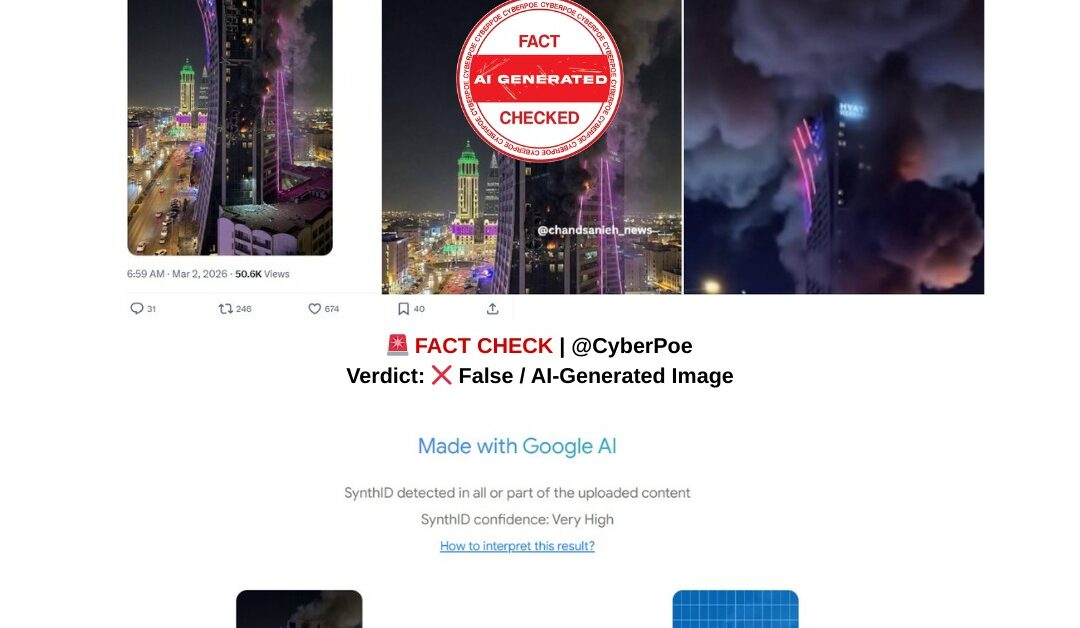
In early March 2026, a dramatic image began circulating widely across social media platforms including X,[1] Facebook,[2] and other messaging channels claiming to show a hotel in Riyadh engulfed in flames after being struck by Iranian missiles. The image prominently displays a high-rise building with heavy smoke billowing from its upper floors, while the name “Hyatt Regency” is clearly visible near the top of the structure.
Posts accompanying the image alleged that the hotel had been deliberately targeted because foreign intelligence officers were supposedly staying there during a period of escalating regional tensions. Several viral captions framed the incident as part of Iran’s retaliation following the large-scale U.S.–Israel strikes on Iran on February 28, which reportedly triggered a series of Iranian missile and drone attacks across the Middle East.
One widely circulated post claimed that Iranian missiles had struck the Hyatt Regency hotel in Riyadh where intelligence personnel were staying, presenting the image as visual confirmation of the alleged attack. Because the image appeared highly realistic and included recognizable building signage, many users interpreted it as authentic documentation of a major security incident inside the Saudi capital.
The claim spread quickly in an already volatile information environment where reports of drone strikes, missile interceptions, and regional retaliation were dominating headlines. However, closer examination shows the viral image does not depict a real event.
What CyberPoe Verified
Technical analysis of the image indicates that it was generated using artificial intelligence rather than captured during a real-world incident.
The picture was examined using Google’s SynthID detection system,[1] a tool specifically designed to identify synthetic content produced by generative AI models. SynthID works by detecting invisible digital watermarks embedded into images created using Google’s AI generation tools.
When the circulating image was analyzed, the system returned a result showing “very high confidence” that the visual was AI-generated.
These watermarks are embedded during the image creation process and remain detectable even if the file is resized, compressed, or slightly modified. Because the watermark is not visible to the human eye, detection tools like SynthID are often used to verify whether an image was produced by generative AI.
The presence of this marker strongly indicates that the viral image originated from an AI image generator rather than a real photograph taken at a missile strike site.
No Evidence of an Attack on the Hotel
Beyond the technical findings, there is also no credible reporting that the Hyatt Regency hotel in Riyadh was struck by Iranian missiles.
While Saudi Arabia did experience security incidents during the regional escalation, verified reports describe a different set of events.
According to statements from the Saudi Ministry of Defense, drones struck the U.S. Embassy compound in Riyadh on March 3, while additional drones were intercepted near Riyadh and the nearby city of Al-Kharj. [1] Saudi air defense systems reportedly destroyed multiple incoming drones during the incident.
Although some media outlets reported that the embassy compound hosts intelligence facilities, none of the official statements or verified news reports mentioned damage to the Hyatt Regency hotel or any civilian hotels in the Saudi capital.
If a large hotel in Riyadh had been struck by missiles, it would almost certainly have been reported by both regional and international media. The absence of such reporting further undermines the claim.
Visual Comparison With the Real Building
Images of the actual Hyatt Regency Riyadh Olaya, which are widely available through travel platforms and hotel listings, confirm that the building architecture closely resembles the structure seen in the viral image.
However, verified photographs show the hotel standing intact and operating normally, with no indication of fire damage or destruction.
The similarity between the real building and the viral image suggests that the AI system likely used publicly available photos of the hotel as visual references when generating the fabricated scene.
This technique is common in synthetic misinformation, where AI tools combine recognizable landmarks with dramatic imagery to create realistic-looking but entirely fictional events.
CyberPoe Verdict
❌ False / AI-Generated Image
The viral image claiming to show the Hyatt Regency hotel in Riyadh burning after an Iranian missile strike is synthetic media created using artificial intelligence.
Analysis using Google’s SynthID detection system identified the image with very high confidence as AI-generated, and no credible news reports confirm any attack on the hotel.
The circulating visual is therefore not evidence of a real strike, but an AI-generated fabrication that spread online during a period of heightened geopolitical tension.