Project Info
Category
Date
🚨 Fact-Check | Did Mollie O’Callaghan Say She Would Boycott the 2028 Olympics if Lia Thomas Competes?
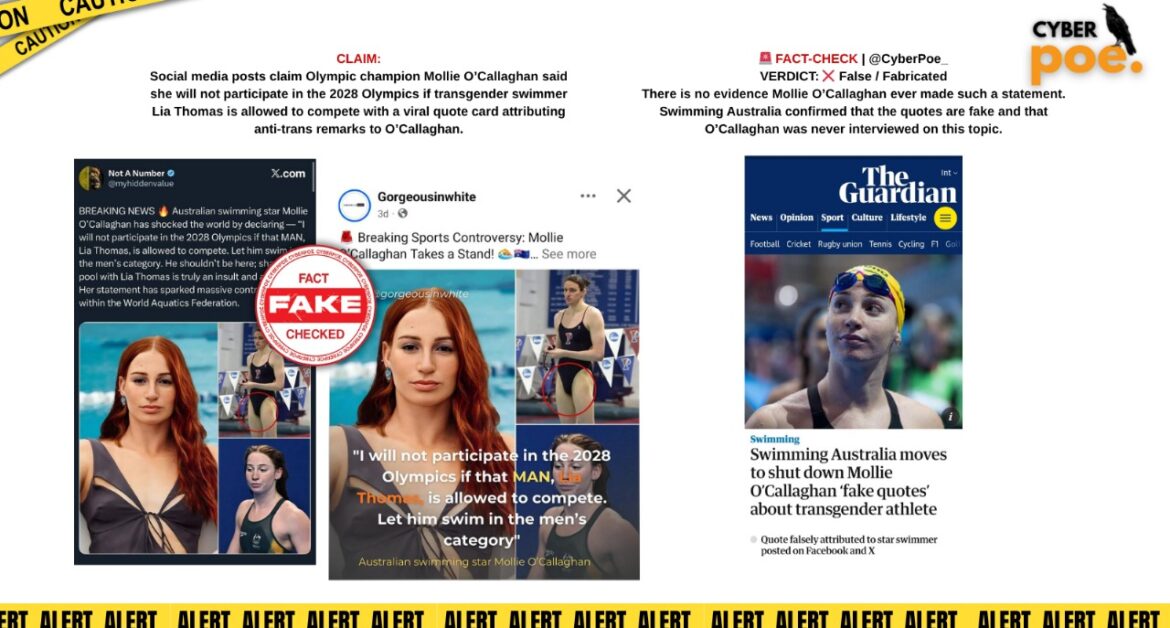
In mid-October 2025, social media platforms were flooded with posts claiming that Olympic champion Mollie O’Callaghan had vowed not to participate in the 2028 Olympics if transgender swimmer Lia Thomas was allowed to compete. A viral image designed like an official sports quote card carried O’Callaghan’s photo, Olympic branding, and a fabricated quote suggesting that she strongly opposed the inclusion of transgender athletes in women’s competitions. The graphic quickly gained momentum on X (Twitter), Facebook, and TikTok, accumulating thousands of shares and comments. However, the claim turned out to be entirely false. The viral post was a textbook example of digital disinformation exploiting a polarizing issue to spread outrage and confusion.
The Origin of the Viral Claim
The viral image appeared on social media in the second week of October 2025, initially shared by several unverified accounts. It falsely attributed to O’Callaghan a statement threatening to boycott the 2028 Olympics if Lia Thomas the transgender swimmer previously associated with NCAA competitions were permitted to participate. The fabricated image used authentic-looking visual cues, such as logos, watermarks, and media-like formatting, to mimic the design of credible sports journalism graphics. This tactic is common in online disinformation, where creators attempt to lend false claims legitimacy by visually replicating real news outlets. Despite its convincing presentation, a thorough verification of O’Callaghan’s official pages, media interviews, and reputable news databases revealed that she never made any such statement
Official Clarification from Swimming Australia
In response to the viral claims, Swimming Australia the national governing body for the sport issued an official clarification confirming that Mollie O’Callaghan had never been interviewed or quoted on this topic. The organization described the circulating quotes as fabricated and emphasized that no Australian sports media outlet had ever reported such comments. Moreover, O’Callaghan herself has made no public statement regarding Lia Thomas or the inclusion of transgender athletes in international swimming events. This categorical denial from both the athlete’s side and her governing body effectively debunks the false narrative circulating online.
The Broader Context of the Lia Thomas Debate
The controversy surrounding Lia Thomas, a transgender swimmer from the United States, has been one of the most contentious debates in modern sports. Since competing in NCAA events, Thomas has become a focal point of discussions on gender, fairness, and inclusion within women’s athletics. International federations, including World Aquatics, have since revised eligibility criteria for transgender athletes, sparking global dialogue and political polarization. While this debate continues to unfold, the viral post about O’Callaghan attempted to exploit the genuine controversy by inserting a fabricated voice into the conversation. By falsely attributing divisive remarks to a respected athlete, the creators of the fake quote manipulated an emotionally charged issue to provoke conflict and engagement online.
The Disinformation Strategy Behind the Fake Quote
This fabricated post fits a familiar pattern in the digital misinformation landscape: blending real issues with invented statements to create outrage. The goal of such content is not to inform but to polarize. By framing O’Callaghan as having made strong anti-trans comments, the creators of the graphic weaponized her public image to legitimize a divisive narrative. The fake quote was crafted to attract emotional reactions, drive algorithmic visibility, and reinforce ideological biases across both sides of the debate. In reality, there is no verifiable evidence no transcripts, interviews, or official posts that support the claim. The viral image was a deliberate attempt to mislead audiences under the guise of a credible sports statement.
CyberPoe X Verdict
After verifying official statements, reviewing social media archives, and cross-checking news databases, CyberPoe X concludes that the viral claim attributed to Mollie O’Callaghan is entirely false. She never made the alleged remarks about Lia Thomas, nor did any legitimate media organization publish such statements. The image circulating online is fabricated and intentionally designed to appear authentic. It is a clear example of digital disinformation aimed at fueling division and distrust.
The claim that O’Callaghan vowed to skip the 2028 Olympics if Lia Thomas competes has no factual basis. It reflects a growing trend in online manipulation where misinformation is disguised as “news” to exploit sensitive topics and generate virality. Users are urged to verify such posts before sharing, especially when they appear without verifiable sources or originate from anonymous accounts.
The Final Word
The Mollie O’Callaghan–Lia Thomas controversy demonstrates how easily false narratives can distort public perception and harm reputations. By fabricating quotes and presenting them as legitimate statements, misinformation campaigns not only mislead audiences but also erode trust in journalism, sports institutions, and public discourse. As online polarization deepens, fact-checking and digital literacy have never been more essential.
CyberPoe X continues to stand at the frontline of the information war exposing manipulated narratives, verifying viral claims, and promoting accountability in the digital age. Misinformation thrives in the absence of verification; truth survives only when challenged and confirmed.
⚡ CyberPoe X | The Anti-Propaganda Frontline
Reference