Project Info
Category
Date
Imposter Website Falsely Promoted as Sri Lanka’s Official Fuel Pass Registration Portal
The Viral Claim
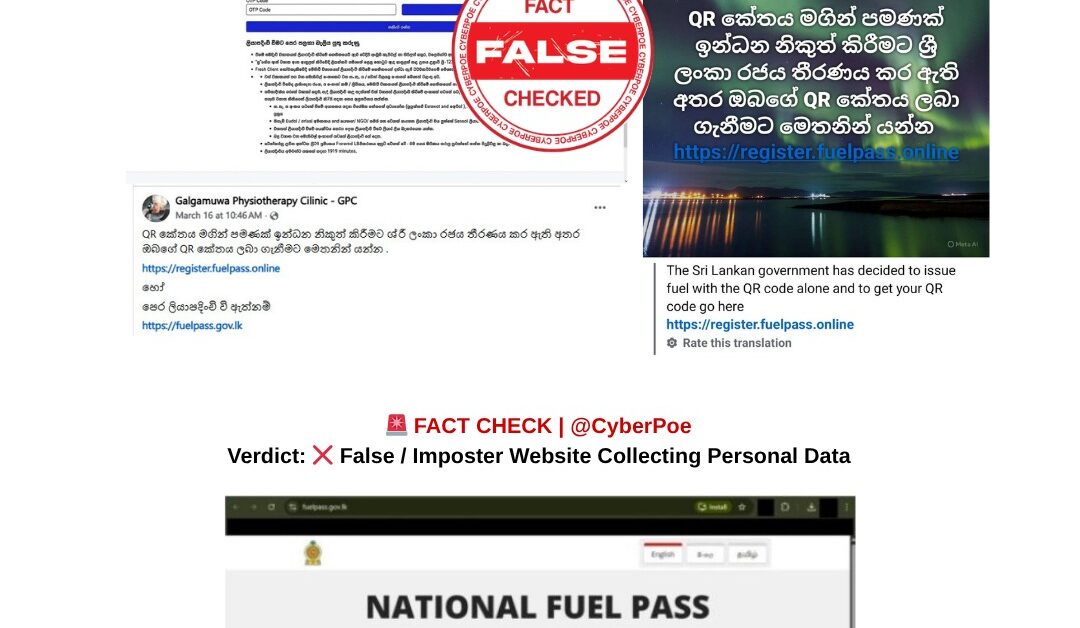
As Sri Lanka began preparing for potential fuel shortages amid global disruptions linked to the ongoing Middle East conflict, social media users started sharing posts urging citizens to register for a National Fuel Pass QR code through a specific website link. The posts,[1] circulating widely on platforms such as Facebook[2] and WhatsApp, claimed that the government had made the QR code mandatory for fuel purchases and directed users to a website that supposedly allowed them to register for the system.
One widely shared Sinhala-language message stated that the government would only distribute fuel to those who possessed a QR code and instructed readers to follow the provided link to obtain it. The link directed users to a website displaying the logo of the state-owned Ceylon Petroleum Corporation (CPC),[3] giving the impression that the platform was part of the official government fuel rationing system.
At first glance, the website appeared convincing. It featured a simple registration interface asking users to enter personal information such as their full name, national identity card number, driving licence number and vehicle licence plate number. Because the design resembled a legitimate government portal and referenced a real national program, many users believed the website was authentic and began sharing the link with others.
However, verification shows that the website circulating in the viral posts is not the official government platform.
What CyberPoe Verified
Sri Lanka has indeed reintroduced the National Fuel Pass system,[1] a QR code–based rationing mechanism that was first implemented during the country’s severe economic crisis in 2022.[2] The system was designed to manage limited fuel supplies by allocating a fixed amount of fuel to registered vehicles each week.
Authorities revived the system amid concerns that the expanding Middle East conflict could disrupt global energy supply chains. Iran’s actions near the Strait of Hormuz, one of the world’s most critical oil shipping routes, have raised fears about possible delays or shortages in petroleum shipments. Sri Lanka, which imports all of its petroleum products, is particularly vulnerable to fluctuations in global oil supply.
Although the government does provide an official online portal for registering vehicles in the fuel pass system, the website circulating in the viral posts is not the legitimate platform.
The authentic government registration site operates under the official domain fuelpass.gov.lk,[1] which is part of Sri Lanka’s government domain structure. In contrast, the viral website uses a different domain name that is not affiliated with any government institution.
A visual comparison between the two sites reveals additional differences. The official portal features Sri Lanka’s national emblem and a verified government interface, while the circulating website only displays a copied CPC logo and a simplified form designed to collect personal information.
Official Confirmation and Cybersecurity Concerns
Sri Lankan authorities have confirmed that the website being shared online is fraudulent. Mayura Neththikumarage, managing director of the Ceylon Petroleum Corporation, stated that the circulating link is fake and not associated with the official fuel pass system.
When such fraudulent links are identified, they are forwarded to the Sri Lanka Computer Emergency Readiness Team (CERT), the national agency responsible for cybersecurity incidents.
According to Charuka Damunupola, a lead information security engineer at CERT, authorities have already identified and taken down multiple fraudulent websites impersonating the government’s fuel pass platform. These sites are typically created to harvest personal data from unsuspecting users.
Information such as national identity numbers, vehicle registration details and licence plate information can be exploited by scammers for identity theft, financial fraud or other forms of digital abuse. Because the fake site mimics a government service during a time of national concern about fuel availability, it increases the likelihood that users will trust and share the link without verifying its authenticity.
CyberPoe Verdict
The website circulating on social media claiming to offer registration for Sri Lanka’s National Fuel Pass QR code is fraudulent. Authorities have confirmed that the platform is not affiliated with the government and is designed to collect personal information from users.
Motorists seeking to register for the fuel pass system should only use the official government portal at fuelpass.gov.lk and avoid submitting personal details on unverified websites.