Project Info
Category
Date
Old Riot Footage Falsely Rebranded as Minneapolis Unrest After 2026 ICE Shooting
Overview of the Viral Claim
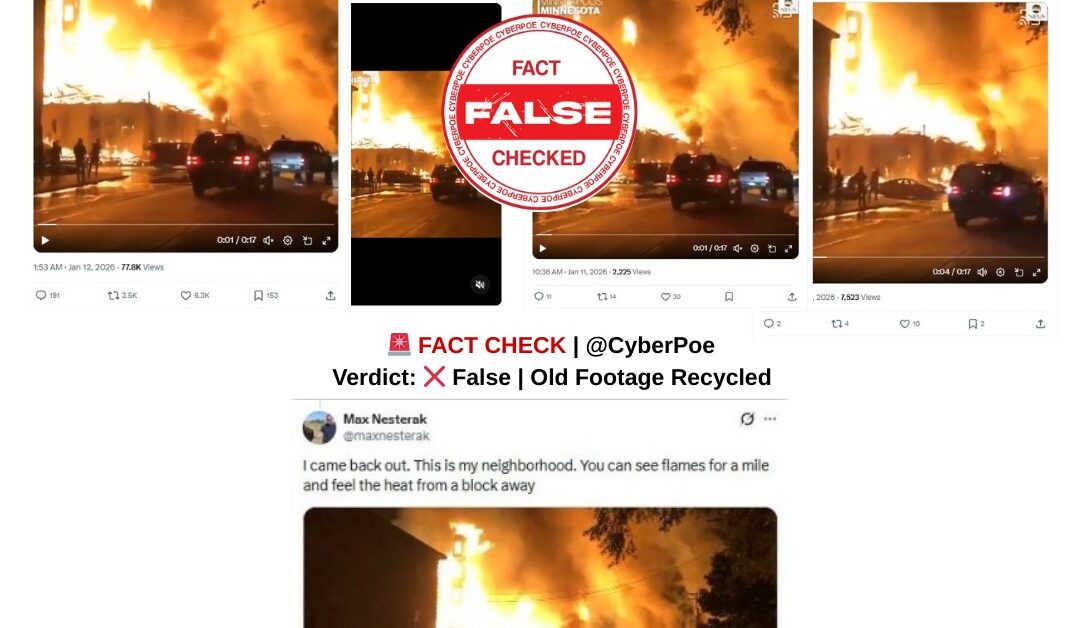
In the days following the fatal shooting of 37-year-old Renee Nicole Good[1] by a U.S. Immigration and Customs Enforcement agent on January 7, 2026, social media platforms were inundated with dramatic and emotionally charged visuals presented as evidence of widespread unrest in Minneapolis. Among the most widely shared was a video showing a large building engulfed in flames at night, with the blaze illuminating surrounding structures. Viral captions claimed the footage showed riots erupting across Minneapolis in response to the ICE shooting. Several posts asserted that the city was being “burned down” by protesters, while others explicitly blamed “Antifa supporters,” framing the tragedy as a trigger for violent, organized chaos. The video circulated rapidly across X,[2] Threads,[3] Facebook,[4] and other platforms, reinforcing the impression that the city had descended into lawlessness.
Why the Narrative Gained Traction
The claim gained momentum because it emerged during a moment of heightened emotion, political polarization, and limited immediate visual reporting from the ground. High-profile cases involving law enforcement or federal agencies often generate intense public scrutiny, and audiences actively seek visual confirmation of unrest or retaliation. The dramatic nature of the footage featuring a massive fire and dark urban skyline matched long-standing visual associations with riots in Minneapolis stemming from earlier historical events. For many viewers, especially those outside the city, the video appeared plausible without further verification. The invocation of “Antifa,” a loosely defined anti-fascist label frequently used in partisan narratives, further amplified engagement by activating existing political fears and assumptions. Together, these factors allowed an old video to be accepted as current evidence by thousands of users.
CyberPoe’s Verification and Timeline Analysis
CyberPoe conducted a detailed verification process using reverse image searches, archival video analysis, and open-source reporting comparisons. This investigation conclusively determined that the video did not originate in January 2026. Identical versions of the same footage were traced back to May 28, 2020,[1] nearly six years before the ICE-related shooting. The earliest confirmed source of the video is journalist Max Nesterak of the Minnesota Reformer, who posted the clip during the height of the unrest following the killing of George Floyd by a Minneapolis police officer. Nesterak shared the video as part of a real-time social media thread documenting conditions in his neighborhood during the overnight hours of May 27–28, 2020. This timeline alone invalidates any claim linking the footage to events in 2026.
What the Video Actually Shows
In its authentic context, the video captures a moment from the 2020 Minneapolis uprising, one of the most significant periods of civil unrest in recent U.S. history. Following George Floyd’s death, large sections of the city experienced fires, property destruction, and confrontations between protesters and law enforcement. The burning structure visible in the clip aligns with widely documented scenes from that period, both in scale and in setting. The surrounding infrastructure, lighting conditions, and absence of any indicators tied to the 2026 protests further support this conclusion. The footage reflects a historical moment of intense upheaval, not a reaction to the ICE shooting six years later.
What Actually Happened After the January 2026 Shooting
After Renee Nicole Good was killed on January 7, 2026, demonstrations did take place in Minneapolis and other cities. Protesters gathered to mourn her death, chant her name, and demand accountability from federal authorities. However, reporting from AFP and other reputable news organizations on the ground describes these demonstrations as largely peaceful. Despite freezing winter temperatures and heightened political tension, there were no verified accounts of widespread arson, large-scale property destruction, or citywide rioting connected to the protests. Official statements and independent reporting do not support claims that Minneapolis experienced a return to the level of unrest seen in 2020.
The Role of Visual Recontextualization in Misinformation
This case exemplifies a recurring tactic in online misinformation campaigns: the reuse of old crisis footage to manufacture urgency and fear around new events. By stripping the 2020 video of its original context and attaching it to a 2026 tragedy, misleading posts created a false narrative of escalating violence. Such recontextualization is particularly effective because the footage is real, not fabricated, making it harder for casual viewers to question its authenticity. However, authenticity without context is itself a form of deception. The deliberate pairing of outdated visuals with current events distorts public understanding and inflames political divisions.
Why Accurate Context Matters
Misrepresenting footage from past unrest has serious consequences. It undermines trust in credible reporting, spreads unnecessary panic, and can influence public opinion and policy debates based on false premises. In cases involving sensitive issues such as immigration enforcement and civilian deaths, misinformation can deepen social fractures and overshadow legitimate calls for accountability and reform. Accurate context allows audiences to respond to events based on facts rather than fear-driven narratives.
Conclusion
CyberPoe’s investigation confirms that the viral video of a building engulfed in flames does not depict riots following the January 2026 ICE-related shooting in Minneapolis. The footage originates from May 2020, during protests after the killing of George Floyd, and has been falsely repackaged to misrepresent current demonstrations. While protests did occur after Renee Nicole Good’s death, they were largely peaceful and bore no resemblance to the scenes shown in the viral clip. This case highlights how easily old footage can be weaponized to inflame tensions during moments of national grief and underscores the importance of verifying timelines, sources, and original contexts before accepting or sharing dramatic visuals.
CyberPoe | The Anti-Propaganda Frontline