Project Info
Category
Date
The Truth Behind the Miscaptioned “Morocco Killing Dogs” Photo
Introduction: A Viral Image, A Distorted Narrative
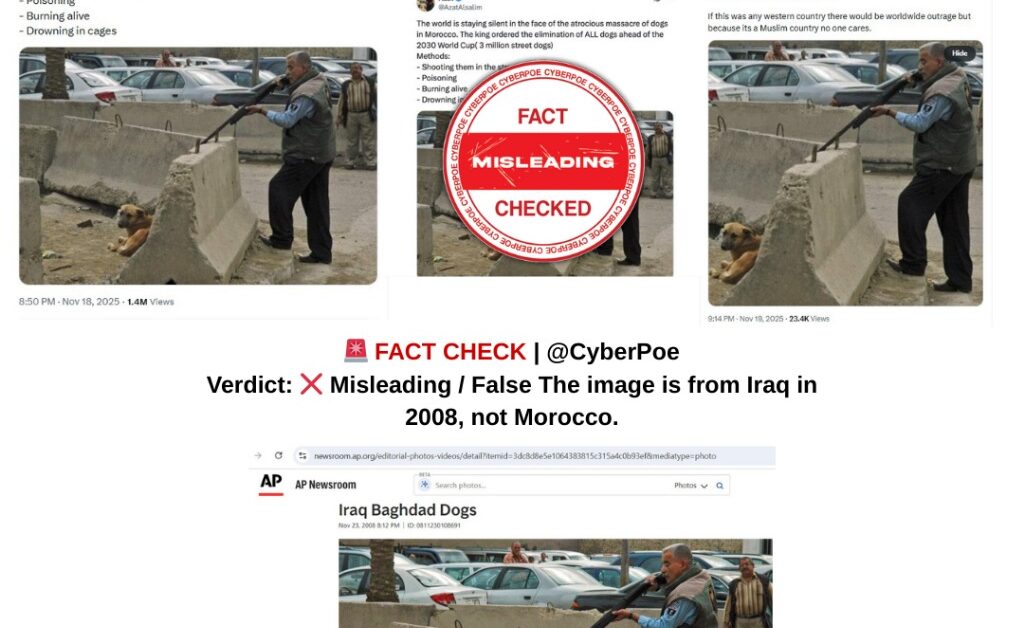
In recent weeks, a deeply unsettling photograph has flooded social media timelines, Including X[1] and Facebook[2] depicting a man pointing a firearm at a dog in what appears to be a scene of imminent cruelty. The post accompanying the image claims that Morocco has begun mass killings of stray dogs as part of its preparations for co-hosting the 2030 FIFA World Cup. With over 1.4 million views on X alone, the narrative quickly gained traction, fueling anger, emotional reactions, and calls for international condemnation. However, the story attached to this viral photo collapses under scrutiny. CyberPoe’s investigative review reveals that the image has nothing to do with Morocco, World Cup preparations, or any recent policy decisions relating to stray animals. It belongs to a completely different place, era, and context. Yet its circulation today serves as a powerful example of how miscaptioned visuals can manipulate public perception and shape narratives through misinformation.
Tracing the Photo’s Real Origin
To uncover the truth behind the image, CyberPoe conducted reverse image searches across multiple open-source platforms, including TinEye, Google Lens, and publicly archived media repositories. The earliest digital footprint [1]of the photo leads back to 2008, where it was published in relation to security operations in Baghdad, Iraq. The man holding the weapon is an Iraqi police officer, and the scene was part of routine patrol documentation at a time when the city was undergoing heavy counter-insurgency and public safety operations. This context is well-documented in archived news reports, wire agency releases, and regional media coverage from that period. None of these historical references suggest any association with animal culling policies, Morocco, or international sports events.
The viral narrative conveniently erases this history and replaces it with a sensational claim tied to a current global event the 2030 FIFA World Cup[2]. This is a classic tactic in visual misinformation: lift an old image from a conflict-ridden region, strip it of context, and attach it to an emotionally sensitive issue in an entirely different country. The result is a piece of content that appears credible to the casual viewer but is inherently deceptive.
How a False Caption Reconstructed a New Reality
The transformation of this 2008 Baghdad image into alleged evidence of dog killings in Morocco illustrates how quickly misinformation evolves, especially when it intersects with humanitarian or animal rights concerns. The original post on X alleged that Moroccan authorities had ordered the elimination of “all dogs,” giving the impression of a state-sanctioned eradication campaign. The wording exploited widespread public sensitivity toward animal welfare and generated outrage, criticism, and calls for intervention. Despite the lack of any verifiable link between the image and Morocco, the emotional impact of the photo was enough to override skepticism for many users.
This is precisely the danger CyberPoe warns about: the human brain reacts strongly to emotionally charged visuals, often accepting them at face value before questioning their authenticity. In this case, the miscaption was strong enough to reshape the meaning of the image entirely, placing it within a broader narrative about alleged animal cruelty in preparations for the World Cup. It is not uncommon for old war-zone images to be repurposed to amplify modern political or social controversies, but this instance is particularly harmful because it leverages the suffering of animals to generate online anger without any factual foundation.
The Debate Around Morocco’s Stray Dog Policies
While the viral photo is unequivocally fake in attribution, the broader debate about Morocco’s stray dog population is far more complex. Animal welfare organizations, such as the International Animal Coalition[1], have been vocal about what they describe as large-scale culling operations occurring in Morocco. Some groups argue that the World Cup announcement has intensified these efforts and that millions of stray dogs could be at risk between now and 2030. They warn of what they consider systemic mistreatment and call for international monitoring and ethical alternatives.
Moroccan authorities, however, deny allegations of mass killings. In a statement issued in February, government officials affirmed that local administrations are using internationally recognized and ethical methods to manage stray populations. These include vaccination campaigns, habitat regulation, and controlled sterilization programs. They maintain that no state-ordered slaughter of “three million dogs,” as claimed in some viral posts, has been authorized. This dispute remains ongoing, but it is critical to separate verified evidence from unsubstantiated claims something the viral photo fails to do.
Why Miscaptioned Visuals Are Dangerous
The resurfacing of this 2008 Baghdad photo as “proof” of Moroccan cruelty illustrates a broader problem in the digital age. Images carry immense persuasive power. When miscaptioned, they can mislead millions within hours, influencing public opinion and shaping international discourse. This is why the work of independent fact-checking platforms is increasingly
important. By verifying imagery, cross-checking origins, and disentangling fabricated narratives from real issues, organizations like CyberPoe help maintain integrity in the information environment.
Conclusion: The Importance of Verifying Before Sharing
CyberPoe’s investigation leaves no doubt: the viral image circulating online as evidence of Morocco killing dogs ahead of the 2030 World Cup is miscaptioned and misleading. It originates from Iraq in 2008 and has no link to current events in Morocco. While debates over Morocco’s stray dog policies continue, it is essential to critique them using verified information rather than manipulated or falsely attributed visuals. As misinformation grows more sophisticated, users must exercise caution and verify content before reacting or sharing. In emotionally sensitive issues such as animal welfare, responsible information practices are not just advisable — they are essential.
CyberPoe | The Anti-Propaganda Frontline 🌍